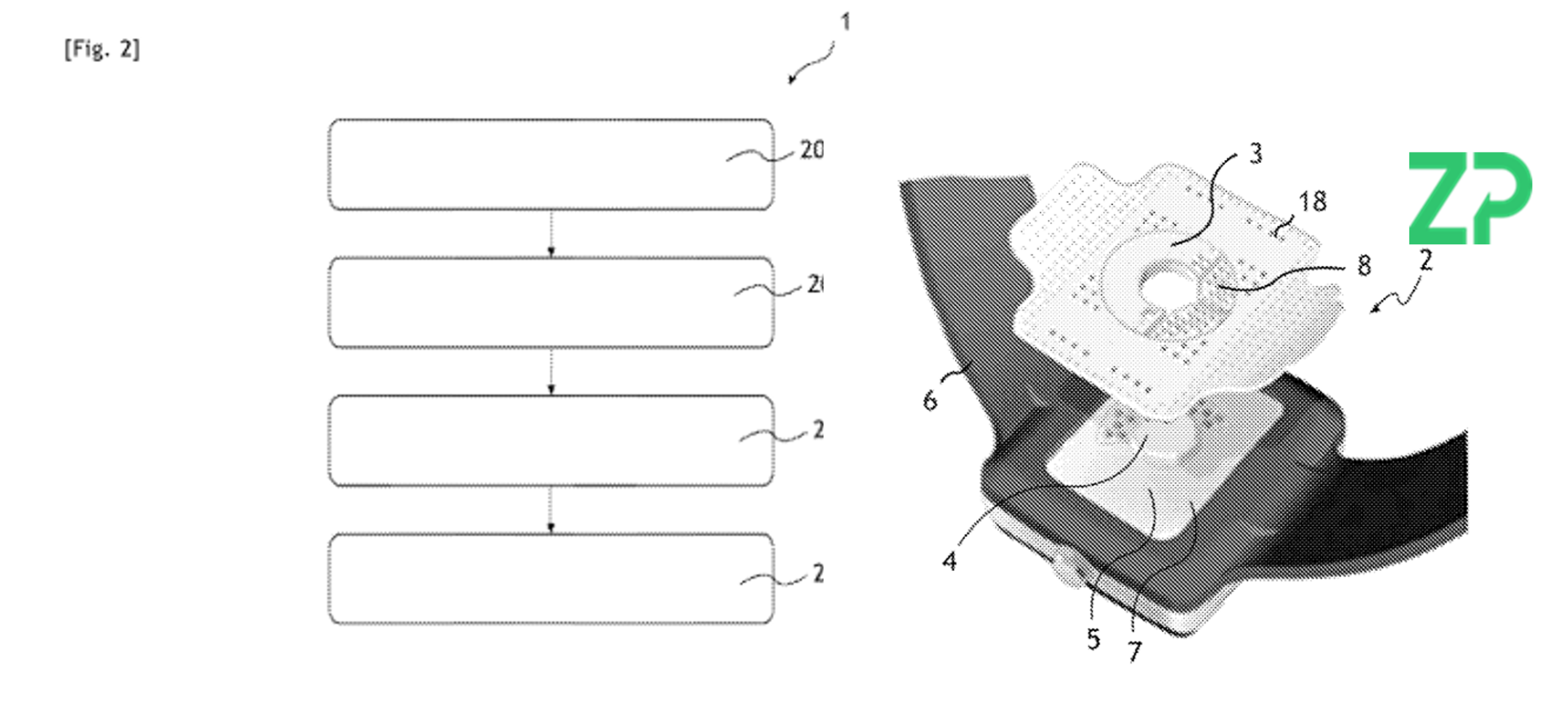
Accurately measuring physiology in the real world requires more than a single sensor reading. Movement, sweat, heart rate, skin conditions, and metabolic state can all distort biochemical signals—especially in continuous, wearable microneedle systems. **ZP's Innovations **addresses this challenge and forms a critical pillar of ZP’s wearable microneedle IP moat by protecting how multiple physiological inputs are combined to produce more reliable, clinically meaningful outputs.
This patent covers a wearable monitoring method in which a microneedle-based analyte sensor—typically measuring glucose or lactate in interstitial fluid—is paired with one or more additional physiological sensing modules. These secondary inputs can include motion, skin impedance, humidity, heart rate, pH, or other activity-related signals. Rather than treating these measurements independently, ZP’s invention fuses them algorithmically to correct, filter, or reinterpret biochemical data in real time.
In practical terms, this means the system can automatically distinguish between true physiological changes and artefacts caused by motion, sweating, or variations in skin condition. For example, glucose or lactate readings affected by physical activity or microneedle movement can be corrected or discarded, resulting in a more accurate and stable signal. The same multi-input approach enables the derivation of higher-order physiological metrics, such as stress or muscular fatigue, which cannot be reliably measured using a single sensor alone.
Importantly, the patent is tightly integrated with ZP’s microneedle platform. The analyte sensor itself is based on microneedle electrodes inserted painlessly into the dermis, while the supporting sensors are housed within the same wearable device and synchronised over defined time windows. This protects not just a concept, but a system-level architecture spanning hardware, sensing strategy, and data processing.
Within ZP’s broader wearable microneedle IP portfolio, this invention secures the physiological intelligence layer—complementing patents that protect microneedle insertion, biochemical coatings, dynamic range extension, electrical connectivity, and mechanical robustness. Together, these layers create a deep IP moat that covers how wearable microneedle systems are built, how they sense, and how their data is made trustworthy.
For partners and collaborators, this translates into a decisive advantage: access to wearable microneedle platforms that deliver context-aware, clinically relevant measurements, protected by IP that is difficult to design around and readily deployable across medical, wellness, and performance applications.