This section of the webinar is about the development of Electrochemical Aptasensor for the Detection of the Key Virulence Factor YadA of Yersinia enterocolitica
Main Points of the Study
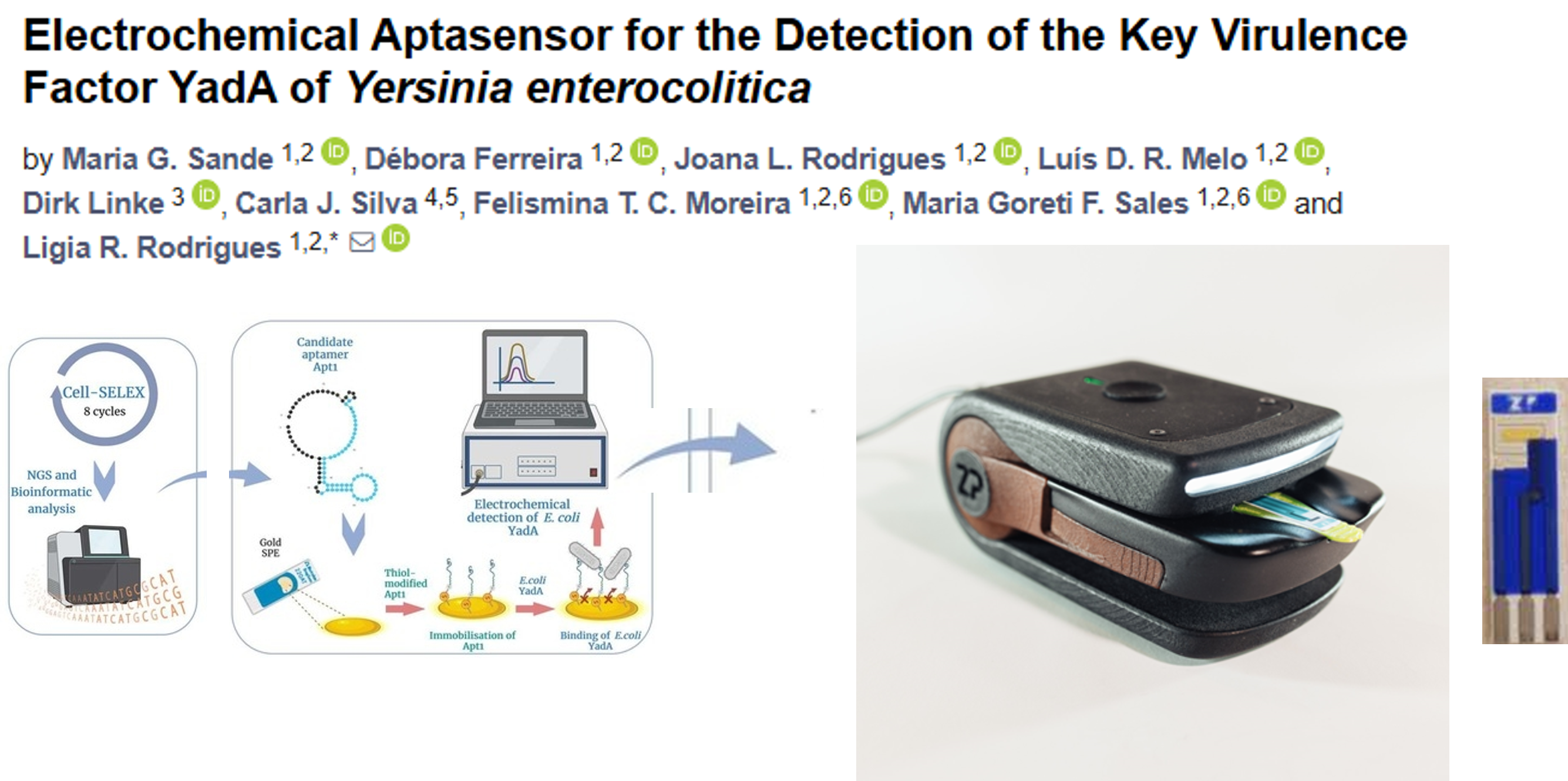
Objective: To create a point-of-care (POC) diagnostic tool for Y. enterocolitica infections, overcoming the limitations of conventional methods like culture and molecular techniques.
Methodology
Aptamer Selection: New aptamers were identified using cell-systematic evolution of ligands by exponential enrichment (cell-SELEX) targeting E. coli expressing YadA.
Aptamer Characterization: The most promising aptamer, Apt1, was found to bind specifically to YadA with a dissociation constant (Kd) of 11 nM.
Biosensor Development: Apt1 was immobilized on gold screen-printed electrodes (Au-SPE) to create a label-free electrochemical biosensor.
Validation: The biosensor's performance was validated using cyclic voltammetry, impedance spectroscopy, and square wave voltammetry.
Results
The biosensor detected YadA in a linear range between 7.0 × 10^4 and 7.0 × 10^7 CFU mL−1 with a square correlation coefficient >0.99.
The limit of detection was 7.0 × 10^4 CFU mL−1, and the standard deviation was ~2.5%.
The biosensor showed high sensitivity and selectivity, with minimal interference from non-target bacteria.
Conclusion
The developed aptasensor is a sensitive and selective POC detection system for Y. enterocolitica, with potential applications in clinical diagnostics. The approach can be adapted to develop biosensors for other bacterial targets.