In our weekly webinar we discussed detecting leadin fresh water and saline water.
Contact ZP to discuss heavy metal detection
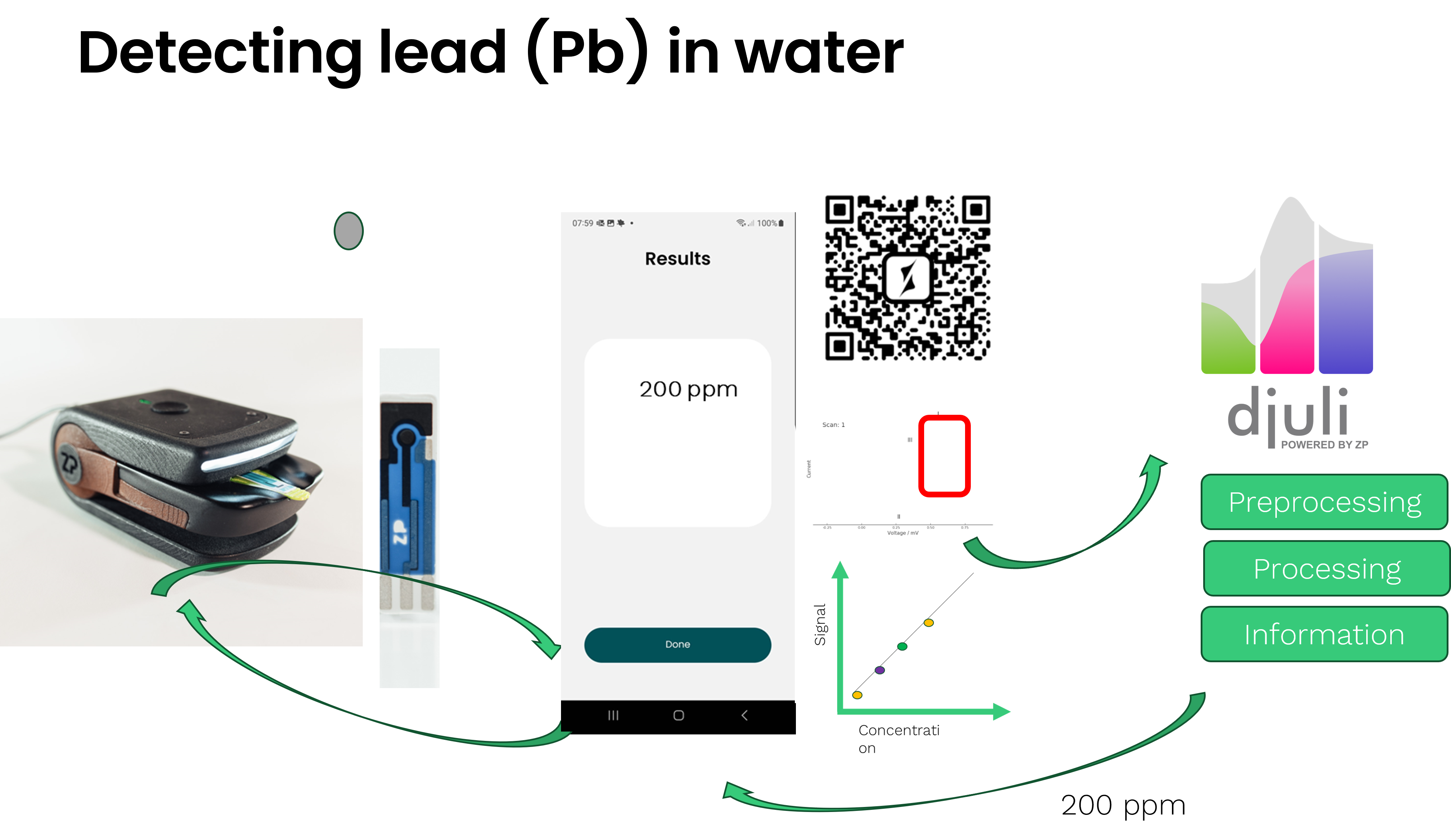
Q: What fraction of the sample lead is it measuring? A: It measures all the free and labile species, as well as total lead.
Q: What are the reagents used to prepare the sample? Are you acidifying? A: Yes, we are acidifying.
Q: What is the typical cost of this gadget? Does it require mains electricity to run, or is it powered by a rechargeable battery? A: The gadget costs 1600 Euros.
Q: How important is the vortex step for mixing? Can the sample be mixed adequately by just inverting it in the buffer a few times, especially for field use? A: The vortex step is not needed.
Q: Are the sample cartridges single-use? A: Yes, they are single-use.
Q: What material is the electrode made of? Is it still mercury? A: It may be illegal to use mercury, so alternatives are likely in use.
Q: Is it possible to analyze all those metals (Zn, Cd, Pb, As, and Cu) in a single sample in one sweep? A: Yes, it is possible.
Q: What sort of limit of detection (LOD) do you get with this setup for the metals? Can it reach nM concentrations by preconcentrating longer? A: The limit of detection (LOD) is 5 ppb.
Q: Can this gadget be used for both fresh and saline water samples? A: Yes, using a ratio of 4 parts buffer to 1 part sample.
Q: Is it remotely possible to analyze phosphorus using electrochemistry? A: Yes, it is possible.
Q: Could the gadget be adapted for submersion and continuous monitoring without the need for pre-preparation of the sample? A: Yes, it can be adapted for continuous nitrate monitoring.