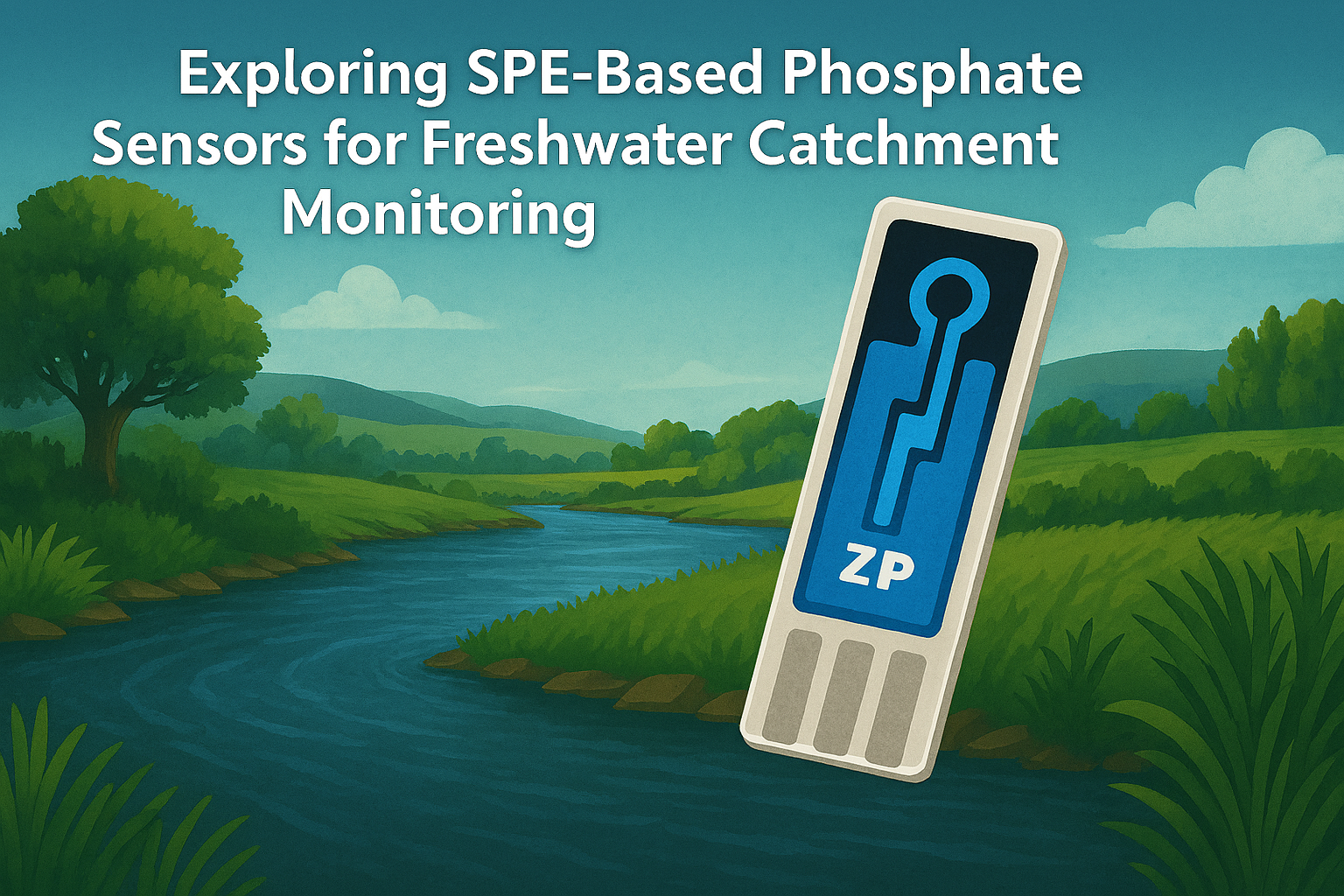
Phosphate sensors from Zimmer and Peacock - https://shop.zimmerpeacock.com/en-gb/products/phosphate-sensor
Developing reliable, scalable phosphate sensors for freshwater environments remains a key challenge at the intersection of electrochemistry, environmental science, and commercial deployment. A recent technical exchange with a PhD research team highlights both the opportunities and the practical hurdles involved in modifying screen-printed electrodes (SPEs) for this application.
This article distils the discussion into broader insights relevant to researchers, engineers, and organisations working on environmental sensing technologies.
The Research Context: Phosphate Monitoring in Freshwater Catchments
The enquiry came from an academic research group working on a doctoral project focused on creating a phosphate sensor network for freshwater catchments. As part of their work, they had already:
- Purchased and evaluated commercial phosphate SPEs
- Successfully tested these electrodes using standard phosphate solutions
- Identified SPEs as a promising platform for distributed monitoring
The next step in their research was more experimental: investigating whether cobalt-based materials, specifically cobalt oxide, could be used to develop a new phosphate-sensitive SPE.
The Technical Challenge: Binding Metal Oxides to Carbon SPEs
One of the central difficulties raised was metal adhesion. The research team explored:
- Drop-casting cobalt oxide onto carbon SPEs
- The inherent instability of metal and metal oxide films on carbon substrates
- The idea of mixing PVC with carbon black to form a conductive, adhesive film
This is a well-known issue in electrode modification: simple drop-casting often leads to poor adhesion, inconsistent coverage, and limited long-term stability.
Adhesion of metal oxides onto carbon SPEs is a well-known challenge, particularly when using straightforward deposition methods.
Current Industry Experience with Metal and Metal Oxide Modification
From an industry perspective, nanoparticle and metal oxide attachment to SPEs is an active area of development. While various approaches are under investigation—including metal and metal oxide systems—there is currently no universally recommended or standardised methodology for cobalt oxide attachment to carbon SPEs.
For exploratory work of this kind, a general-purpose, modifiable carbon electrode is often the most appropriate starting point. In this case, a versatile carbon SPE such as the Hyper Value 501 carbon electrode provides a stable and flexible platform for experimentation:
- Suitable for surface modification
- Compatible with a range of binders and coatings
- Designed for cost-effective testing and iteration
You can find more details on this electrode here:
Hyper Value 501 Carbon Electrode
Improving Adhesion and Performance: Key Considerations
While no single solution fits all applications, several high-level considerations emerged from the discussion:
1. Binder Selection Matters
Binder-based approaches can improve adhesion, but they introduce trade-offs:
- Too much binder can reduce electrochemical activity
- Inappropriate binders can block active sites
- Mechanical stability must be balanced with conductivity
PVC, Nafion, and other polymer systems are often explored, but optimisation is highly application-specific.
2. Beyond Drop-Casting
Simple drop-casting is attractive for its simplicity, but alternative strategies may offer better reproducibility and stability, including:
- Composite inks
- Controlled layer-by-layer deposition
- Hybrid carbon–metal oxide formulations
These approaches typically require more development time but can yield more robust electrodes.
The Bigger Picture: Commercial Viability of Phosphate Sensors
Beyond the technical challenges, the exchange raised a critical question:
Who pays for large-scale phosphate monitoring?
While there is strong academic, regulatory, and environmental interest in phosphate sensing, commercial deployment faces persistent obstacles:
- Multiple stakeholders express interest
- Funding responsibility is often unclear
- Procurement discussions frequently stall at scale
This gap between technical feasibility and commercial adoption remains one of the largest barriers to widespread sensor networks.
Regulatory Pressure May Change the Landscape
There are signs, however, that this situation could evolve. One example discussed was a legal case concerning the ecological condition of a major UK river system, where:
- Large sections of the river are classified as being in unfavourable condition
- Elevated phosphate levels are linked to algal blooms
- A significant proportion of pollution is attributed to agricultural runoff, with the remainder linked to wastewater sources
Cases like this may help clarify:
- Regulatory accountability
- Monitoring requirements
- Long-term funding mechanisms
Such developments could play a decisive role in accelerating adoption of SPE-based phosphate sensors.
Conclusions: Promise with Practical Constraints
Screen-printed electrodes remain a highly promising platform for freshwater phosphate monitoring, particularly due to their:
- Low cost
- Scalability
- Suitability for distributed sensing networks
However, challenges around surface modification, material adhesion, and commercial deployment should not be underestimated. Progress will depend not only on advances in electrode chemistry, but also on regulatory clarity and funding models.
Technical innovation alone is rarely enough—successful environmental sensing solutions must align scientific capability with economic and regulatory reality.
For organisations and researchers exploring this space, early engagement with both technical partners and end-users can be just as important as the chemistry itself.

