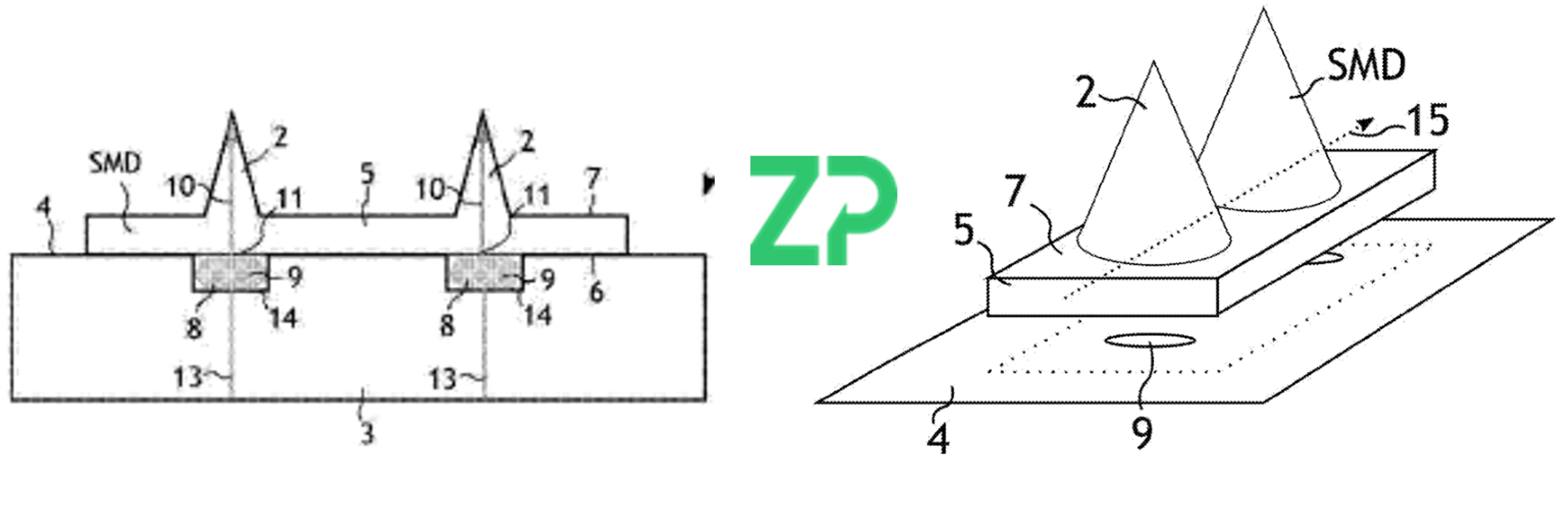
For wearable microneedle systems, accuracy does not start on the body—it starts before the device is ever worn. One of ZP’s foundational patents, WO 2021/209727, protects a comprehensive approach to preparing, stabilising, and calibrating microneedle sensors prior to use, forming a critical layer in ZP’s wearable microneedle IP moat.
This invention introduces a dedicated sensor preparation ecosystem that allows microneedles to be pre-wetted and, when required, pre-calibrated in a controlled liquid environment. Microneedles are gently pressed into a sealed pocket containing a known preparation or calibration solution, ensuring the sensing surfaces are fully activated and electrochemically stable before skin insertion. This dramatically reduces start-up drift, improves first-day accuracy, and shortens the time to reliable measurements.
A key strength of the system is its flexible hardware architecture. Preparation can take place in a simple disposable box, a reusable station, or a combined charging and preparation dock. Mechanical clips or covers apply controlled pressure to immerse the microneedles, while visual indicators guide the user through timing and completion. In many configurations, the sensor can be prepared while already installed in the wearable, eliminating handling steps and reducing contamination risk.
The patent also protects an integrated pre-calibration workflow. By measuring a known analyte concentration—such as glucose—before wear, the system calculates and stores a correction factor that automatically compensates for sensor drift during real use. This recalibration data can be stored in the wearable, the sensor capsule, or the preparation station itself, enabling seamless replacement of modular sensor capsules without compromising accuracy.
Within ZP’s broader portfolio, this patent complements IP covering microneedle geometry, insertion verification, electrochemical measurement control, adhesion, modular capsules, and continuous wear power management. Together, these inventions protect not just how biomarkers are sensed in the skin, but how wearable microneedle systems are manufactured, prepared, calibrated, charged, replaced, and trusted over their full lifecycle.
For partners collaborating with ZP, this capability represents more than a preparation step. It is part of a system-level IP moat that de-risks scale-up, improves real-world reliability, and enables a truly end-to-end wearable sensing platform. By embedding sensor preparation into the product ecosystem itself, ZP ensures that performance is engineered in—long before the microneedles ever touch the skin.