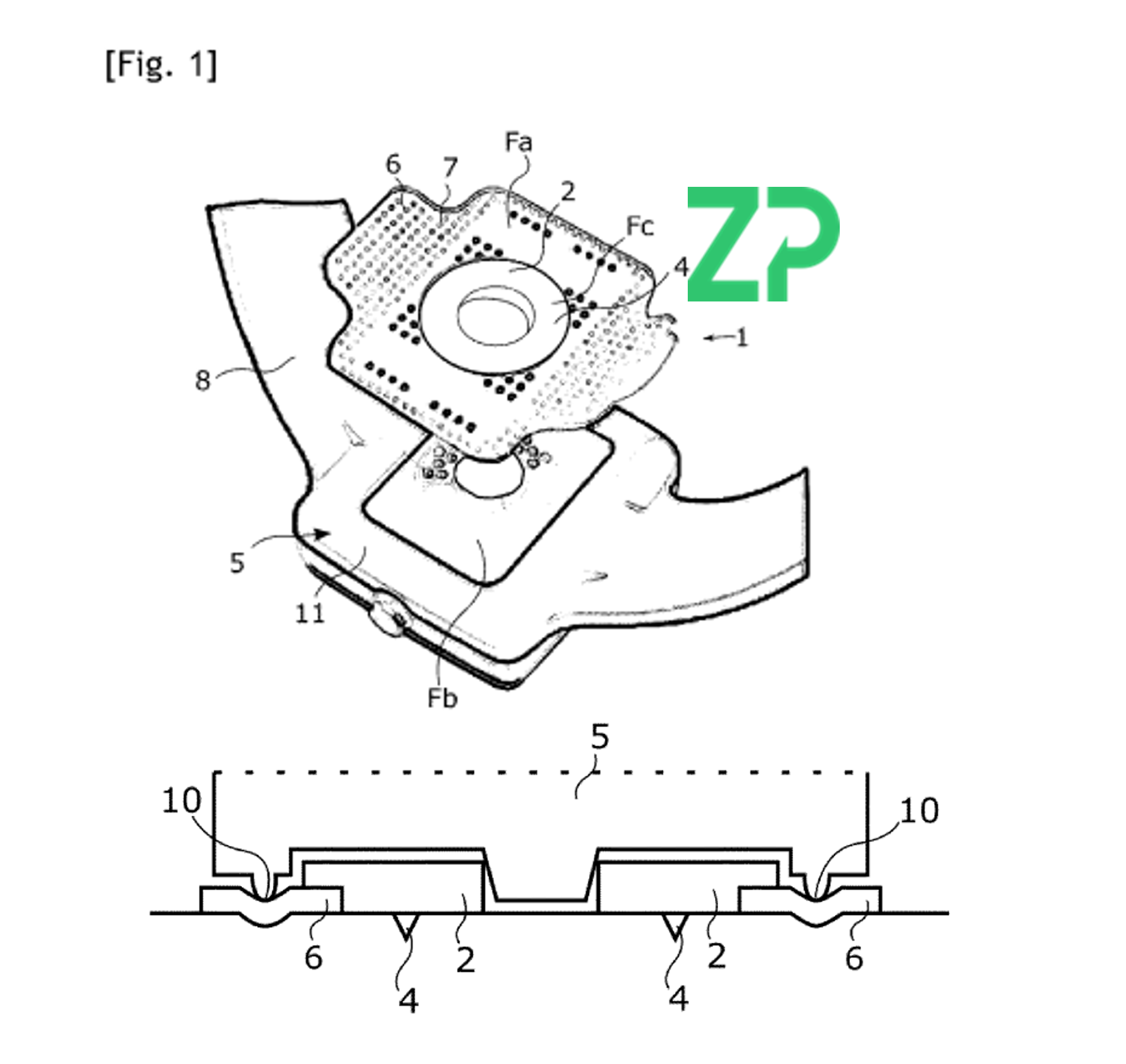
For wearable microneedle systems, performance does not stop at the sensor itself. How the device attaches to the skin—comfortably, reliably, and without irritation—is just as critical to long-term success. One of ZP’s key patents addresses this often-overlooked challenge by rethinking how microneedle wearables use adhesives.
Rather than relying on aggressive, single-use medical adhesives, this invention introduces a low-adhesion, skin-friendly patch that holds microneedles in place while remaining repositionable and reusable. The adhesive strength is carefully controlled to be strong enough to maintain skin contact, yet gentle enough to allow removal and reapplication without pain, hair removal, or skin damage. This gives users something rare in wearable sensing: the ability to correct placement mistakes without discomfort.
What makes the system robust is how adhesion is combined with mechanical design. Instead of asking the adhesive to do all the work, the wearable housing and strap apply controlled pressure to the patch, stabilizing the microneedles during use. Localized pressure features help prevent edge lifting, extending wear time without increasing adhesive aggressiveness. The result is a device that can be worn for extended periods—days rather than hours—while remaining discreet, comfortable, and reliable.
Within ZP’s broader wearable microneedle portfolio, this patent forms a critical structural layer. It complements IP covering microneedle capsules, modular replacement, skin interfaces, repositioning strategies, signal stability, and continuous operation. Together, these inventions protect not just how biomarkers are measured, but how real users live with wearable microneedle technology day after day.
For ZP’s partners, this translates into a powerful advantage: access to a system-level IP moat that addresses sensing, safety, comfort, and usability as a unified platform. By embedding these patented design principles into client projects, ZP helps deliver wearable microneedle products that are not only technically advanced, but genuinely wearable in the real world.