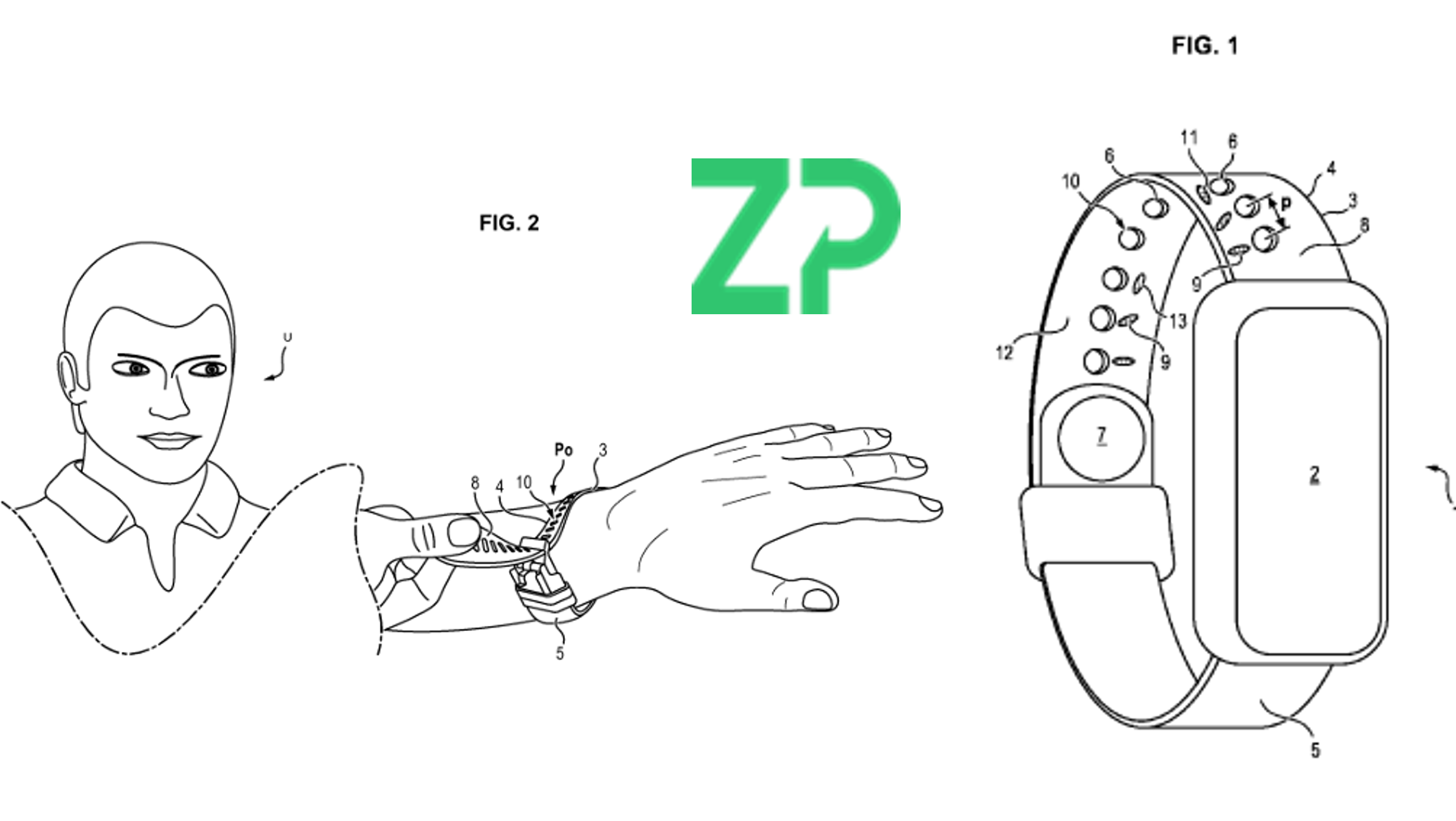
In wearable microneedle systems, how tightly a device is worn is not a cosmetic detail—it directly affects data quality. Too loose, and microneedles lose stable contact with the skin. Too tight, and local blood flow, comfort, and signal reliability can be compromised. One of ZP’s patented innovations addresses this overlooked but critical variable, strengthening ZP’s wearable microneedle IP moat at the user–device interface.
This patent protects an adjustable bracelet system that allows users to reproduce the same level of tightness reliably and repeatedly. Instead of relying on subjective feel, the strap incorporates a sequence of clearly identifiable visual or tactile markers aligned with discrete fastening positions. Each adjustment point is uniquely recognisable—through shape, colour, orientation, or relief—so users can confidently return to a known, validated fit.
Importantly, the markers are visible regardless of how the device is worn. Whether the bracelet is fastened on the left or right wrist, or rotated during daily use, the system ensures that adjustment cues remain intuitive and unambiguous. This enables consistent positioning across days, sensor replacements, and different users—an essential requirement for longitudinal physiological monitoring.
When combined with microneedle-based sensing, the value becomes clear. By standardising strap tension, the system helps maintain stable microneedle insertion depth, consistent skin contact, and reproducible measurement conditions. This reduces signal variability caused by mechanical factors rather than biology, improving trust in the data without increasing user burden.
Within ZP’s broader portfolio, this patent complements IP covering microneedle geometry, insertion verification, adhesion systems, sensor preparation, electrochemical control, and continuous wear design. Together, these inventions protect not only how biomarkers are measured, but how wearable microneedle devices are fitted, worn, and used correctly in real life.
For partners working with ZP, this capability represents another example of a system-level IP moat: engineering away human variability at the point where wearable devices most often fail. By controlling fit with the same rigor applied to sensing chemistry and electronics, ZP enables wearable microneedle platforms that deliver reliable data—day after day, user after user.