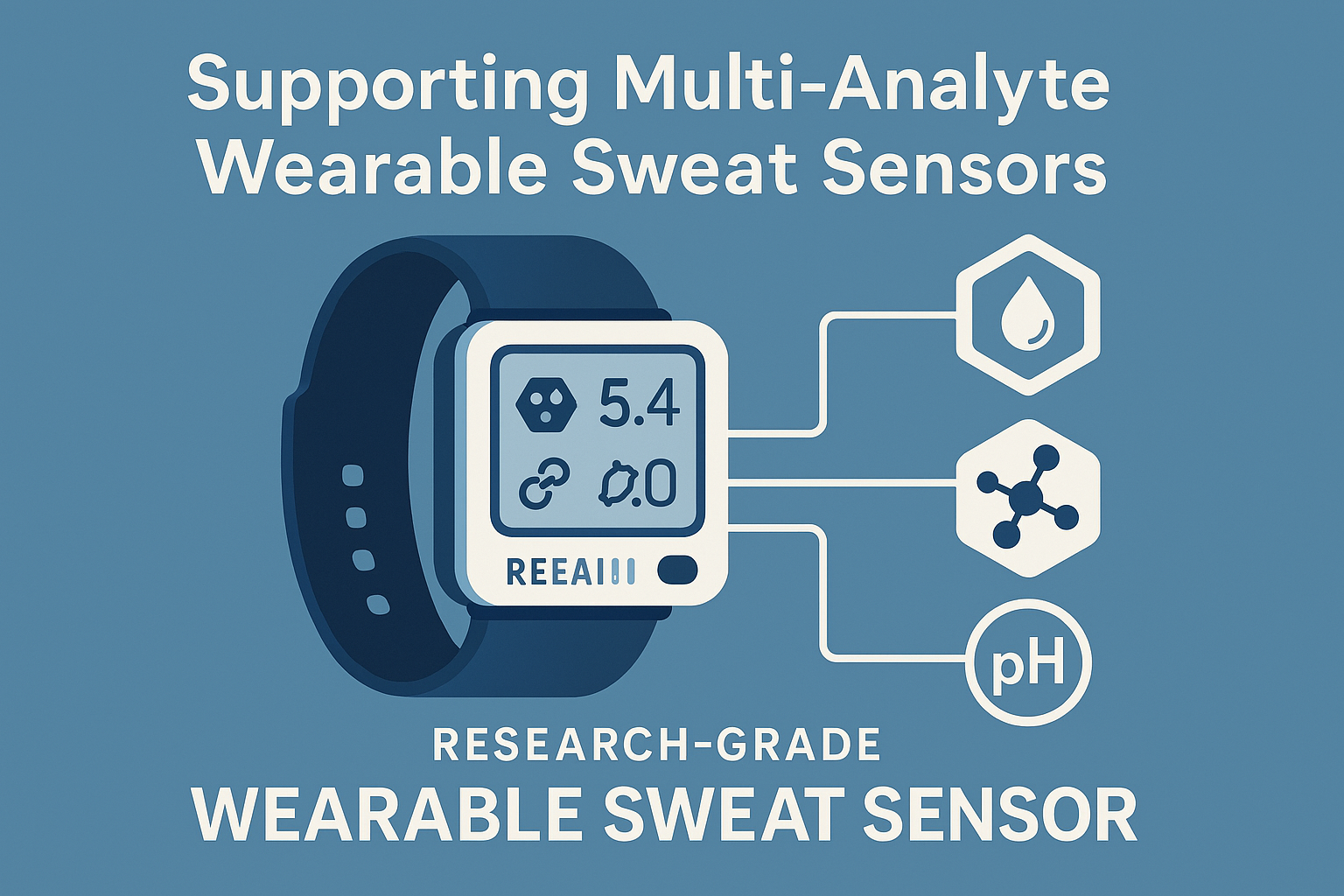
Wearable electrochemical sweat sensing is moving rapidly beyond single‑analyte measurements. As academic and industrial researchers push towards multi‑analyte platforms—combining biomarkers such as glucose, amino acids and pH—questions around electrode compatibility, multiplexing and system integration become critical.
This article is based on a real enquiry from an academic researcher developing a research‑grade wearable sweat sensor using custom molecularly imprinted polymer (MIP) electrodes, and the subsequent technical response. All personal details have been anonymised.
The Research Challenge
The enquiry came from an academic researcher working on:
- Wearable electrochemical sweat sensors
- Custom MIP‑based working electrodes
- A multi‑analyte sensing target (glucose, BCAA and pH)
- A requirement for a publishable, research‑grade wearable prototype
The researcher was exploring whether existing wearable biosensor electronics and sweat patch platforms could support this level of complexity, or whether custom development would be required.
Key Technical Questions Raised
The enquiry focused on three core areas:
1. Multi‑Electrode Measurement Capability
Can the system support multiple working electrodes, either sequentially or in parallel?
This is a fundamental requirement for multi‑analyte sweat sensing, particularly when different electrochemical techniques or electrode chemistries are involved.
2. Integration of Non‑Standard Electrodes
Is it possible to integrate custom electrodes, such as carbon‑fibre or filament‑based formats?
Many academic sensor concepts do not conform to conventional screen‑printed electrode geometries, especially when optimising sensitivity, selectivity or mechanical flexibility.
3. Custom Wearable Platform Development
Is custom development available to adapt electronics and form factor for wearable sweat sensing?
For publication‑quality prototypes, researchers often require tighter control over architecture, signal integrity and manufacturability than off‑the‑shelf systems provide.
Zimmer & Peacock’s Technical Response
Multi‑Channel Electrochemical Measurement
Zimmer & Peacock supports both:
- Sequential multiplexed measurements, and
- True parallel multi‑channel electrochemistry
However, these capabilities are typically delivered through custom development programmes, rather than standard wearable boards. This allows system architecture, firmware and analogue front‑end design to be optimised for the specific sensing strategy.
Supporting Custom and Non‑Standard Electrodes
Integration of unconventional electrodes is a core capability within Zimmer & Peacock’s CRO work, including:
- Carbon‑based and fibre‑based electrodes
- Wire and filament electrodes
- Solid and hollow microneedle architectures
This experience is particularly relevant for research systems that extend beyond traditional screen‑printed formats.
Custom Wearable System Development
For multi‑analyte wearable sweat sensors, Zimmer & Peacock offers end‑to‑end custom development, covering:
- System architecture and electronics
- Multi‑analyte electrochemical measurement
- Wearable form‑factor integration
- Transition towards robust, manufacturable designs
This work is typically delivered within ISO 13485‑controlled workflows, supporting projects that may later progress towards regulated or commercial environments.
Off‑the‑Shelf vs Custom: An Important Distinction
Zimmer & Peacock’s current off‑the‑shelf wearable platform is designed for single‑analyte applications:
For academic groups with limited budgets, the web store exists specifically to support exploratory and early‑stage research:
However, multi‑analyte wearable systems—particularly those intended for high‑quality publications—generally require a structured custom development approach.
A Practical Reality for Academic Projects
An important point raised in the response was the budgetary reality of PhD‑level research. While ISO 13485 contract development offers robustness and traceability, it may not always align with academic funding constraints.
In these cases, researchers often:
- Use off‑the‑shelf boards for early validation
- Engage in partial customisation rather than full system development
- Transition to structured CRO programmes as projects mature
This staged approach can balance innovation, cost and technical rigour.
Takeaway
Multi‑analyte wearable sweat sensing is achievable—but rarely plug‑and‑play.
For researchers working with custom electrodes and advanced biomarker panels, early engagement around system architecture and integration strategy is key. Off‑the‑shelf platforms can accelerate early work, but custom development is usually required to deliver robust, publishable multi‑analyte wearable systems.
Further Reading
For related insights into electrochemical sensor development and custom biosensor platforms, see:

