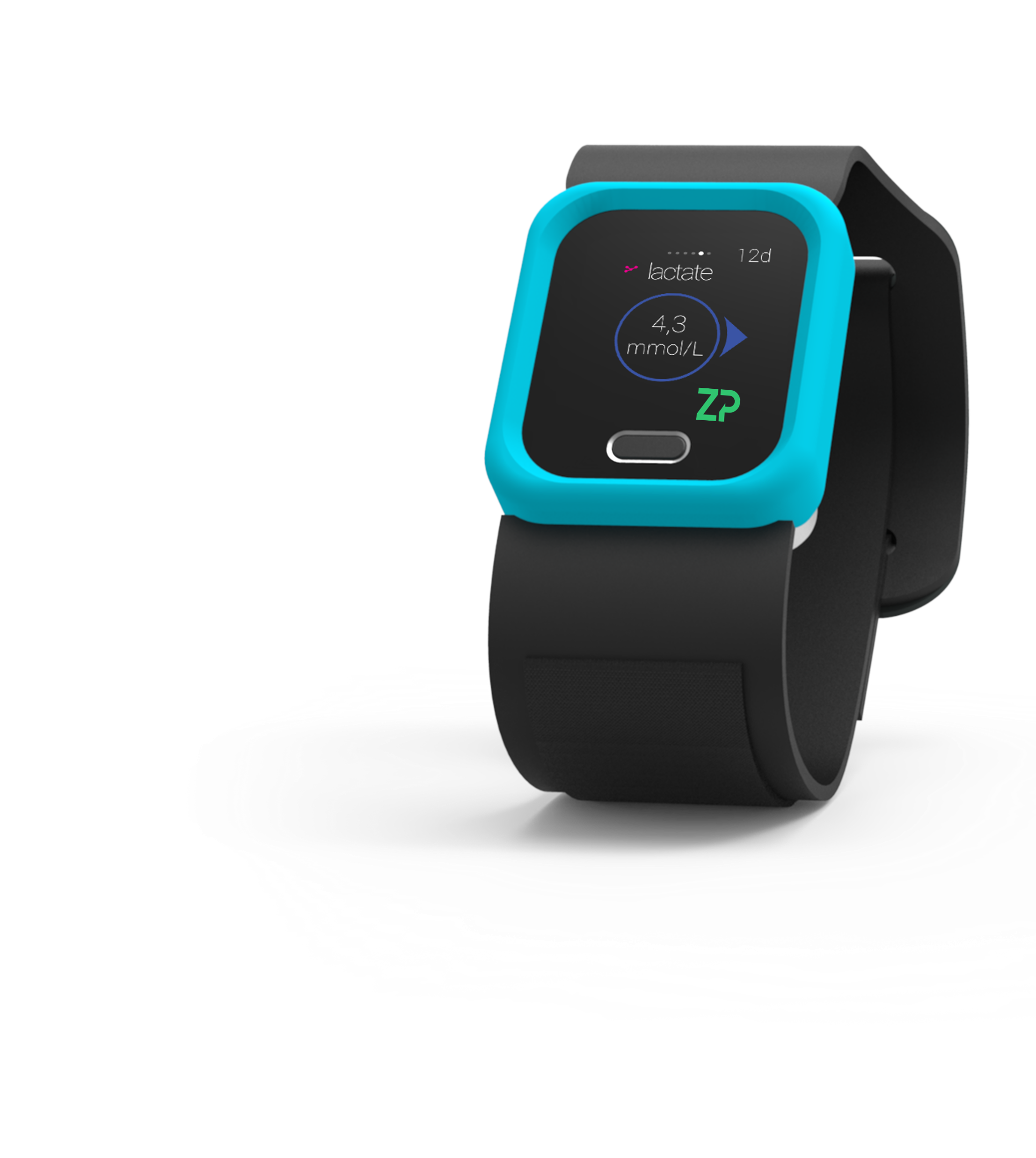
Wearable biosensors promise continuous, real-world insight into human health and wellness, and have now entered the market through Biolinq.
In this article we discuss how working with ZP and leveraging ZP's patent portfolio in microneedles can provide both speed and exclusivity when bringing your wearable microneedle ideas to market.
Microneedles Are the Breakthrough — and the Bottleneck
Microneedles offer a uniquely powerful interface with the body: minimally invasive, information-rich, and compatible with continuous monitoring. However, turning microneedles into a reliable wearable product is extraordinarily complex.
Success requires :
Microneedle geometry and materials
Skin–device interfaces and irritation control
Interstitial fluid contact
Electrochemical sensing and signal stability
Manufacturing
- Freedom to operate
Most players innovate in one layer.Very few control the full stack.
ZP Has Spent Years Solving the Hard Parts
At ZP, our approach has never been about a single patent or feature. It has been about building a coherent, defensible technology platform for wearable microneedle biosensing.
Over multiple generations, our R&D and IP strategy has addressed:
Solid and hollow microneedle architectures
Fluidic extraction using suction and electrophoretic methods
Layered microneedle constructions for signal quality and skin compatibility
Three-electrode electrochemical sensing systems
Pre-wetting and motion-tolerant designs for real-world use
Fully integrated, wearable system configurations
This work is protected by a large, interlinked international patent family, covering not only microneedles themselves, but the surrounding mechanics, electronics, and system behaviours that make them work outside the lab.
The result is not incremental protection.It is foundational coverage.
What This Means for Partners
For companies developing next-generation wearables, diagnostics, or digital health platforms, IP risk is as real as technical risk.
Working with ZP means:
Faster development by building on existing architectures
Reduced freedom-to-operate uncertainty
Access to a technology stack refined through real product constraints
A partner whose patents span the critical interfaces competitors struggle to replicate
In short: fewer dead ends, fewer redesigns, and fewer surprises.
Building the Next Wave of Wearable Biosensors — Together
The wearable biosensor market is entering a new phase—one where success will be defined not by isolated breakthroughs, but by integrated, defensible systems that can scale.
ZP’s microneedle platform was built for that reality.
If you are developing a wearable biosensor and want to move faster, safer, and with long-term IP confidence, we believe the most effective path forward is collaboration.
Let’s build the future of biosensing together.