Gold Electrodes: A Surprising Perspective
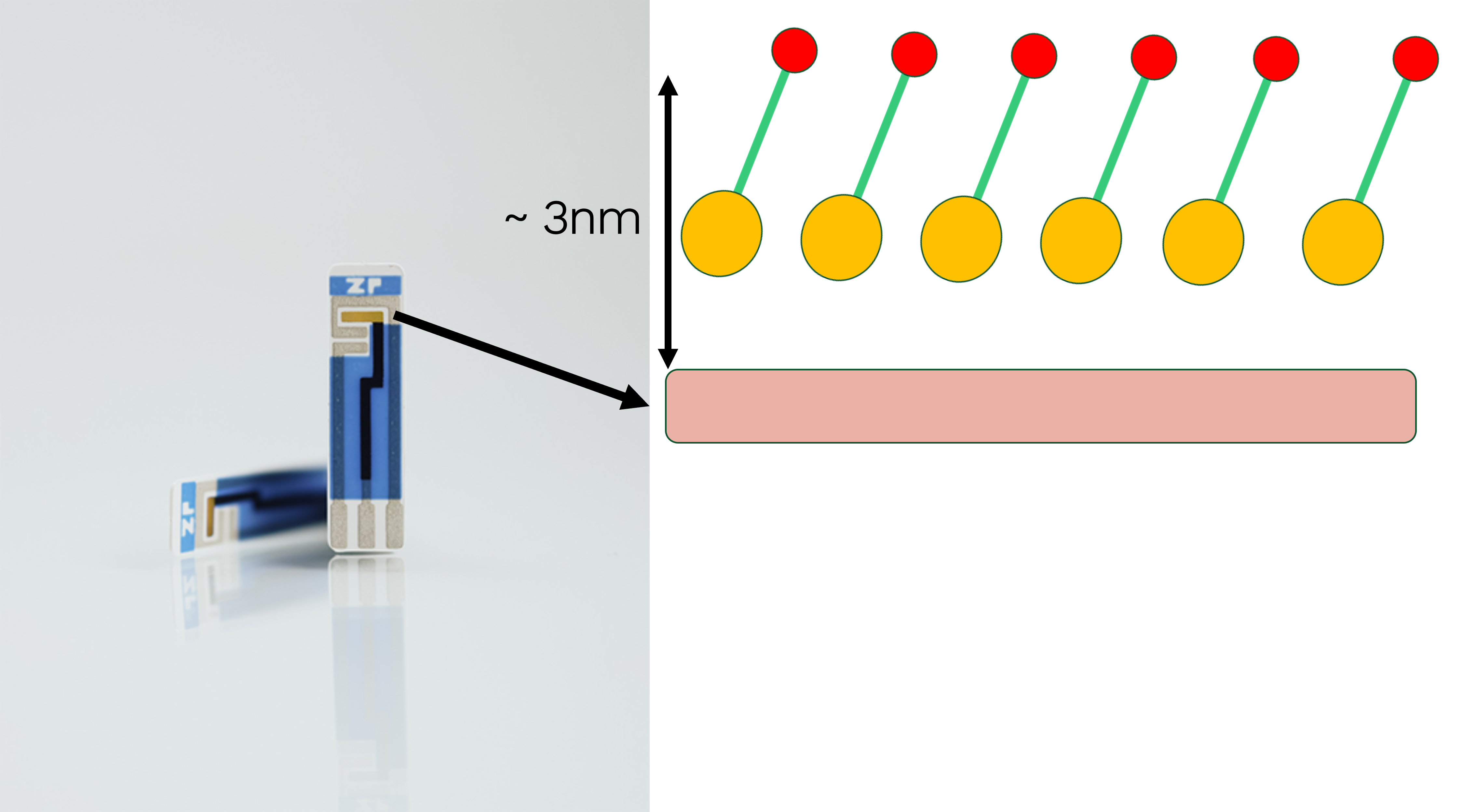
At Zimmer & Peacock, we manufacture a wide range of screen‑printed electrodes—including gold. So it might seem surprising to hear us say that gold electrodes can be a bad idea. The reality is more nuanced: gold is incredibly useful, but only in the right context. Gold in R&D: Powerful and Necessary Gold electrodes are highly valued in R&D because they support self‑assembled monolayers (SAMs), enabling strong and reliable bonding of biological recognition elements such as antibodies, aptamers, and other functional molecules. This makes gold a powerful platform for: Prototyping new biosensors Developing new IP Exploring novel functional chemistry Demonstrating proof‑of‑concept performance For innovation, gold is often the correct choice. But When We Talk About Commercialisation… Over the past several years, the cost of gold has continued to rise—and sharply so. In comparison with other electrode materials, the price difference has become extreme. Today, gold is approximately 179,000 times more expensive than carbon. Manufacturers report needing to invest substantial amounts of capital—sometimes hundreds of thousands of dollars upfront—just to secure enough gold inventory for a production process. That kind of financial burden is incompatible with the development of disposable, low‑cost, mass‑market biosensors. This is why gold becomes problematic during the transition from prototype to product. Carbon: The Practical Material for Commercial Biosensors In contrast, carbon remains: Abundant Stable in price Easy to process Inexpensive Ideal for disposable sensors Carbon does not suffer from the volatility of precious metals. It is not a luxury commodity. It is not required in high‑end electronics. It is simply a reliable, cost‑effective material—one that supports scalable manufacturing. This is why the vast majority of commercial biosensor strips (e.g., glucose meters) rely heavily on carbon, not gold. What About Graphene? Graphene often gets positioned as the “next big thing,” but it does not solve the real problem here. While graphene has exciting properties, it is: Expensive to process Difficult to standardise Challenging to industrialise for large‑scale biosensor production So while graphene is interesting for research, it does not offer the commercial relief people expect. Key Takeaways Gold electrodes are excellent for R&D. Gold electrodes are poor for commercialisation. As soon as a biosensor project needs to hit the market with disposable, low‑cost test strips, gold becomes a mathematical and financial obstacle. Carbon remains the only truly scalable, economically sensible choice. Learn More If you’re navigating material selection for your biosensor, the ZP team is always happy to help you think through the science and the economics of electrode choice. Video Overview